Laatste plaats beschikbaar!
"Lichamelijke activiteit: een belangrijke gezondheidsuitdaging"
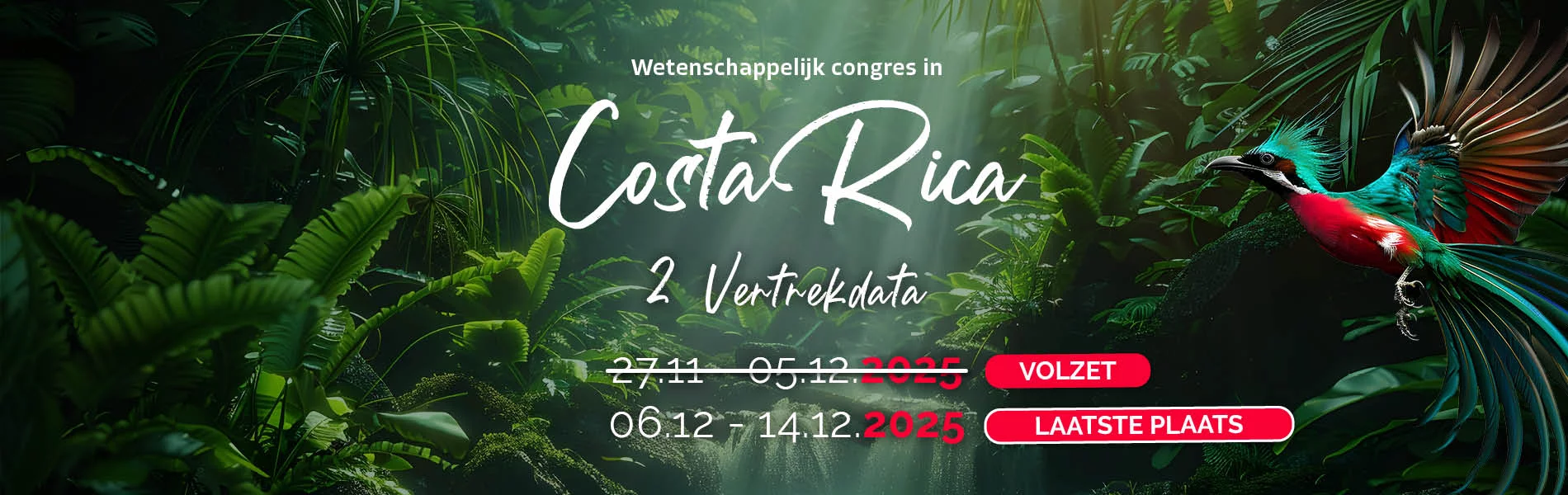
Wetenschappelijk congres in Costa Rica
27.11 - 05.12.2025 | 06.12 - 14.12.2025
Het is een genoegen u uit te nodigen voor een uitzonderlijk evenement in het hart van de ongelooflijke biodiversiteit van Costa Rica. Dit congres biedt een unieke gelegenheid om de laatste vooruitgangen in de medische wetenschappen te verkennen in een zowel inspirerende als exotische omgeving, die bevorderlijk is voor reflectie en uitwisseling.
U krijgt de gelegenheid om uw kennis te delen, uw expertise uit te breiden en verbindingen te leggen met enthousiaste collega’s, alles in een bijzondere omgeving. Discussies, workshops en ontspanningsmomenten zullen een programma samenstellen dat ontworpen is om van dit congres een verrijkende ervaring te maken, zowel professioneel als persoonlijk.
Dompel uzelf onder in de unieke ervaring van dit wetenschappelijk congres in Costa Rica en geniet van een uitzonderlijke setting waar leren en ontdekken samenkomen.
U kunt kiezen tussen twee vertrekopties:
Open - Vertrek 1 - 27.11.2025 - 05.12.2025 : Enkel Franstalige sessies
Laatste plaats - Vertrek 2 - 06.12.2025 - 14.12.2025 : Engelstalige sessies (tweetalige groep Nederlands/Frans)
Représentants et organisateurs du programme scientifique
Dr. Louis
Gossing
Orthopedisch chirurg,
CHIREC
Dr. Guillaume
Losson
Huisarts,
Anderlecht
Programme
Wetenschappelijk programma
"Lichamelijke activiteit: een belangrijke gezondheidsuitdaging"
Voordelen, mogelijke risico's, de rol van artsen en fouten om te vermijden.
Dit congres biedt een multidisciplinaire benadering van het onderwerp vanuit verschillende medische specialismen.
Sportgeneeskunde, cardiologie, voeding, neurochirurgie en gynaecologie zullen elk hun specifieke invalshoek belichten.
Programme scientifique
Moderator
Dr. Louis Gossing
Orthopedisch chirurg bij CHIREC
Sprekers
Dr. Pascal Lefebvre
Cardioloog
Dr. Emmanuel Costa
Neurochirurg
Dr. Guy Vandenhoven
Sportarts
Topics
Introduction to Scuba Diving and Overview: Scuba diving involves the use of a self-contained underwater breathing apparatus. This presentation covers the diving environment, physics, physiology, pathology, and safety considerations.
Diving Environment: The diving environment consists of the physical conditions and factors that affect divers underwater, illustrated by various aquatic situations.
Physics of Diving: The main physical laws relevant to diving include Pascal's law, Archimedes' principle, Boyle's law, Charles' law, Dalton's law, and Henry's law. These explain pressure, buoyancy, and the behavior of gases underwater.
Physiology of Diving: The physiological aspects of diving address how the human body reacts to underwater conditions, supported by various illustrations.
Pathology of Diving: Diving-related pathologies include mechanical accidents (barotrauma), biochemical/toxic accidents such as oxygen toxicity (hyperoxia), carbon dioxide retention (hypercapnia), nitrogen narcosis, carbon monoxide poisoning, and biophysical accidents like decompression sickness, as well as immersion pulmonary edema and other risks such as near-drowning, cold exposure, and marine life hazards.
Prevention and Safety Considerations: Prevention involves organizing dives, planning, medical examinations, identifying contraindications (such as asthma and epilepsy), and training. Medical examinations may include physical exams, ECGs, imaging, pulmonary function tests, tympanometry, and others, with varying frequency depending on age.
Effects of alcohol on diving safety and physiology: Alcohol impairs cognitive and physical functions, enhances nitrogen narcosis, increases dehydration and diuresis, and raises the risk of decompression illness (DCI), hypothermia, hypoglycemia, and cardiovascular strain during diving. It also damages the lungs and peripheral nerves, which further increases accident risk. Zero tolerance is recommended, as well as proper hydration and avoidance of alcohol prior to diving.
Effects of tobacco on diving and respiratory health: Tobacco smoke causes chronic bronchitis, destroys pulmonary cilia, leads to emphysema and lung bullae, increases the risk of pulmonary barotrauma, restricts airflow, and reduces oxygen transport due to carbon monoxide binding to hemoglobin. Smoking before diving reduces tissue oxygenation and increases cardiovascular risks. It is recommended to abstain from smoking for at least 12 hours before diving and seek support to quit smoking.
Effects of cannabis on diving and pulmonary health: Cannabis impairs brain function, increases heart rate and blood pressure, causes respiratory problems similar to tobacco, and may lead to lethargy and reduced cold tolerance in divers. Heavy cannabis use is linked to emphysema and bullous lung disease, possibly due to breath-hold techniques causing barotrauma. The psychoactive effects last for 2 to 4 hours; divers should wait at least 8 hours after use before diving. Rehabilitation is advised to support cessation.
Conclusion and diving safety: The most important piece of diving equipment is the diver’s own body. Physical fitness and health are essential for safe diving.
You are invited to ask questions and join a scientific discussion about diving safety.
Sprekers
Dr. Luc Mathieu
Gynaecoloog
Pr. Dr. Michaël Bruneau
Neurochirurg
Dr. Guy Vandenhoven
Sportarts
Topics
Introduction to Scuba Diving and Overview: Scuba diving involves the use of a self-contained underwater breathing apparatus. This presentation covers the diving environment, physics, physiology, pathology, and safety considerations.
Diving Environment: The diving environment consists of the physical conditions and factors that affect divers underwater, illustrated by various aquatic situations.
Physics of Diving: The main physical laws relevant to diving include Pascal's law, Archimedes' principle, Boyle's law, Charles' law, Dalton's law, and Henry's law. These explain pressure, buoyancy, and the behavior of gases underwater.
Physiology of Diving: The physiological aspects of diving address how the human body reacts to underwater conditions, supported by various illustrations.
Pathology of Diving: Diving-related pathologies include mechanical accidents (barotrauma), biochemical/toxic accidents such as oxygen toxicity (hyperoxia), carbon dioxide retention (hypercapnia), nitrogen narcosis, carbon monoxide poisoning, and biophysical accidents like decompression sickness, as well as immersion pulmonary edema and other risks such as near-drowning, cold exposure, and marine life hazards.
Prevention and Safety Considerations: Prevention involves organizing dives, planning, medical examinations, identifying contraindications (such as asthma and epilepsy), and training. Medical examinations may include physical exams, ECGs, imaging, pulmonary function tests, tympanometry, and others, with varying frequency depending on age.
Effects of alcohol on diving safety and physiology: Alcohol impairs cognitive and physical functions, enhances nitrogen narcosis, increases dehydration and diuresis, and raises the risk of decompression illness (DCI), hypothermia, hypoglycemia, and cardiovascular strain during diving. It also damages the lungs and peripheral nerves, which further increases accident risk. Zero tolerance is recommended, as well as proper hydration and avoidance of alcohol prior to diving.
Effects of tobacco on diving and respiratory health: Tobacco smoke causes chronic bronchitis, destroys pulmonary cilia, leads to emphysema and lung bullae, increases the risk of pulmonary barotrauma, restricts airflow, and reduces oxygen transport due to carbon monoxide binding to hemoglobin. Smoking before diving reduces tissue oxygenation and increases cardiovascular risks. It is recommended to abstain from smoking for at least 12 hours before diving and seek support to quit smoking.
Effects of cannabis on diving and pulmonary health: Cannabis impairs brain function, increases heart rate and blood pressure, causes respiratory problems similar to tobacco, and may lead to lethargy and reduced cold tolerance in divers. Heavy cannabis use is linked to emphysema and bullous lung disease, possibly due to breath-hold techniques causing barotrauma. The psychoactive effects last for 2 to 4 hours; divers should wait at least 8 hours after use before diving. Rehabilitation is advised to support cessation.
Conclusion and diving safety: The most important piece of diving equipment is the diver’s own body. Physical fitness and health are essential for safe diving.
You are invited to ask questions and join a scientific discussion about diving safety.
*En cliquant sur ce lien, vous acceptez d'être redirigé vers le site de notre partenaire de voyage, un site externe.
Étapes
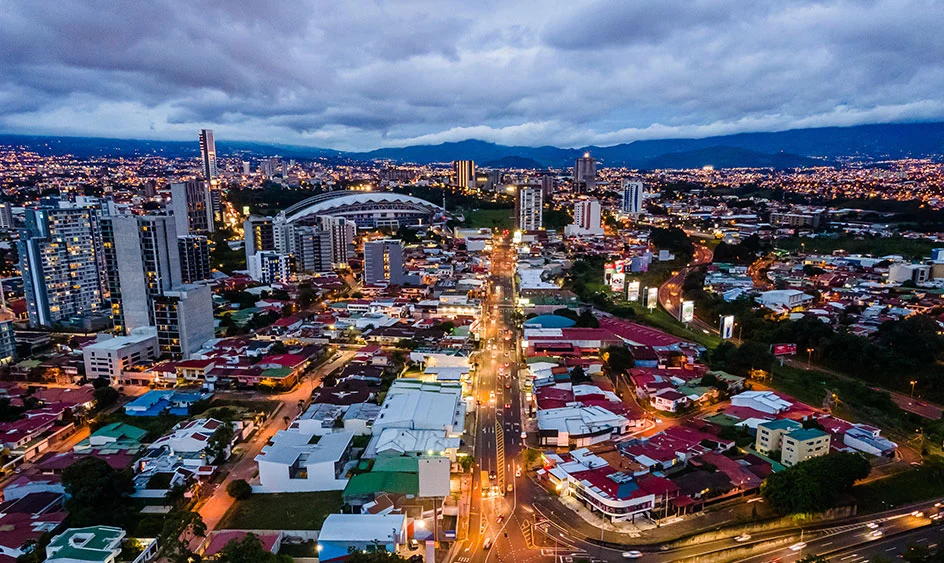
AANKOMST IN SAN JOSÉ
-
Middag: Aankomst op de luchthaven van San José
-
Avond: Diner in het restaurant van het Marriott Hacienda Belen hotel
-
Overnachting in het Marriott Hacienda Belen hotel
DE CENTRALE VALLEI
-
Ontbijt: Geniet van een ontbijt in het hotel
-
Ochtend: Bezoek aan het Nationaal Park Poás vulkaan en de Doka koffieplantages
-
Middag: Beleef een lunch in het hart van de Doka koffieplantages
-
Namiddag: Wetenschappelijke sessie in het Marriott Hacienda Belen hotel
-
Avond: Diner in het restaurant van het hotel
-
Overnachting in het Marriott Hacienda Belen hotel
SAN JOSÉ - PACUARE - TORTUGUERO (Caribische kust)
-
Ontbijt: Geniet van een ontbijt in het Marriott Hacienda Belen hotel
-
Ochtend: Transfer van San José naar Pacuare om de raftingervaring op de Rio Pacuare te beleven richting Tortuguero
-
Middag: "Wild" lunch aan de oevers van de Pacuare rivier
-
Namiddag: Transfer per privéboot naar Caño Blanco, daarna naar het Evergreen Lodge waar u kunt genieten van een proef van Centraal-Amerikaanse rums
-
Avond: Buffetdiner in het restaurant van het Evergreen Lodge
-
Overnachting in het Evergreen Lodge
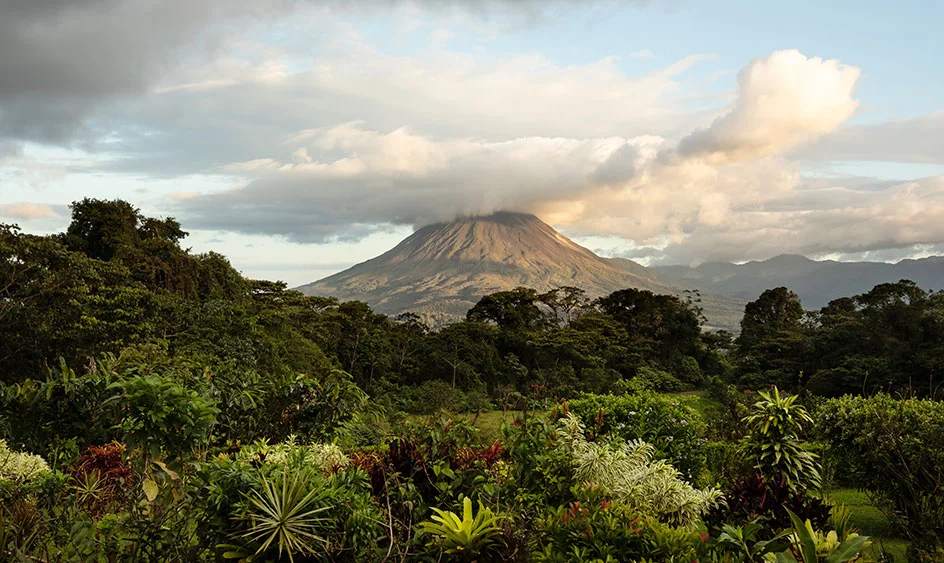
TORTUGUERO - ARENAL (Vulkaan in het centrum van het land)
-
Ontbijt: Geniet van een ontbijt in het lodge
-
Ochtend: Bezoek aan het Tortuguero National Park, gevolgd door de transfer naar Arenal
-
Middag: Tijdens de transfer maken we een stop bij de Palmito Maria plantage voor een demonstratie en een lunch met degustatie van palmhart
-
Namidag: Aankomst in het Arenal Kioro hotel en wetenschappelijke sessie
-
Avond: Diner in het restaurant van het hotel
-
Overnachting in het Arenal Kioro hotel
En partenariat avec


*En cliquant sur ce lien, vous acceptez d'être redirigé vers le site de notre partenaire de voyage, un site externe.